

Finger, Palm, & Inner Lip Tattoos: The Anatomy of Friction and Why Pigment Falls Out
Finger, Palm, & Inner Lip Tattoos: The Anatomy of Friction and Why Pigment Falls Out
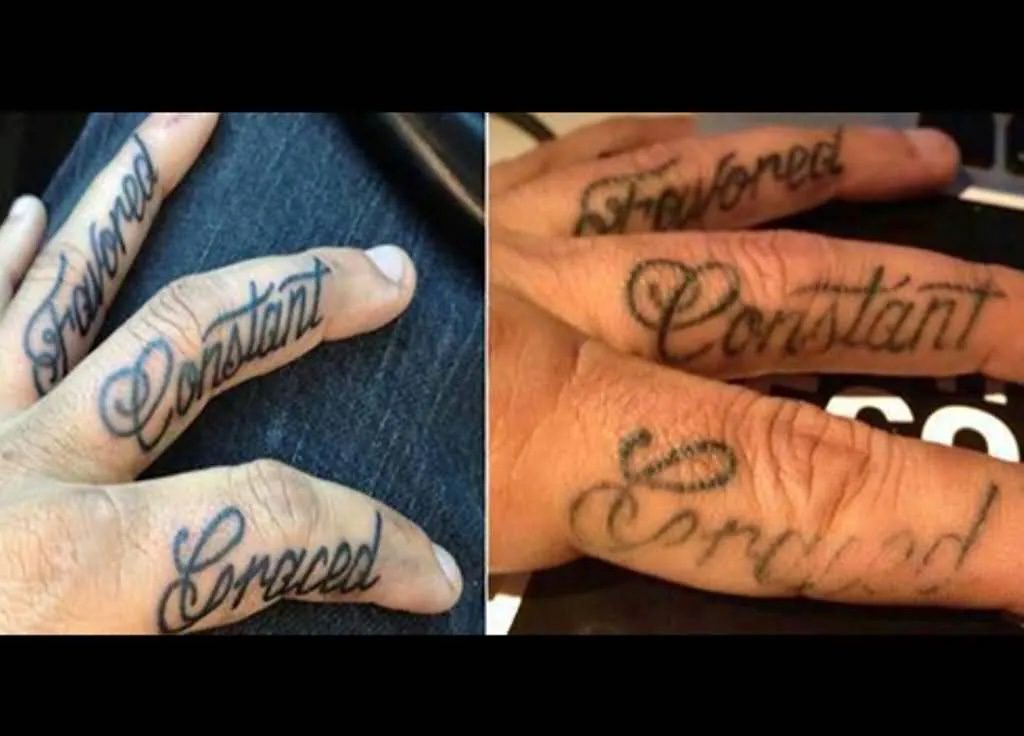
Finger tattoo fading is one of the most common disappointments in tattooing. It is also one of the most preventable, if you understand what is actually happening beneath the surface before you book. Every week someone comes in with a reference photo: a finger tattoo, a palm piece, or a word inked on the inside of the lower lip. The art looks exactly right. The placement feels personal. The question is always the same: will it last?
The honest answer is not what most shops will tell you. These placements can be done and get done constantly. But experienced artists always have the conversation first. Not to talk anyone out of the chair, but because the biology of these three locations is genuinely different from everywhere else on the body, and knowing that changes how you design the tattoo, how you care for it, and what you expect from it in year one, year three, and year five.
All three placements share the same underlying problem: the skin is working against the ink. Here is why.
Why Skin Is Not One Thing
A tattoo lives in the dermis, the second layer of skin sitting below the epidermis you see and touch. The epidermis constantly sheds and renews itself in a process called desquamation: old cells cycle off the surface while new cells push up from below. This happens everywhere on the body. What changes dramatically by location is how fast that cycle runs, how thick each layer is, and how much mechanical punishment that skin takes every single day.
The skin on your forearm, back, or thigh has hair follicles, a consistent outer barrier, and a dermis thick enough to hold pigment for decades with reasonable care. Cell turnover runs approximately every 28 days. It fades with sun, it ages, but it works with the tattoo. The skin on your fingers, your palm, and the inside of your lip runs on a different schedule entirely. That schedule is the core reason ink behaves so differently in high-turnover tissue compared to standard body placement.
Finger Tattoo Fading: The Friction Problem Explained

The skin on your fingers and the palm side of your hand is called acral skin. Anatomically it belongs to its own category. No hair follicles. No sebaceous glands. A dramatically thicker outer layer (the stratum corneum) because this skin evolved specifically to handle constant mechanical stress. Your hands are the highest-friction environment on your body. Every grip, every keystroke, every time you open a door or wash your hands, that skin is doing the job it was built for. The thickness is protection. The rapid cell renewal is the maintenance system keeping pace with the damage.
For a tattoo, this creates a problem at multiple levels simultaneously.
- →Thicker outer barrier. The stratum corneum on finger skin is significantly thicker than on the arm or torso. Getting ink through to the dermis requires precision. Too shallow and it sheds out in weeks; too deep and lines blow out laterally.
- →Thinner dermis. On the back or chest the dermis runs roughly 1.5 to 2mm. On fingers, especially over knuckles, that layer compresses significantly. Less tissue means less volume holding pigment in place. According to research published by the NIH National Library of Medicine on skin anatomy, acral skin has a structurally distinct layered architecture that makes it one of the most technically demanding surfaces for any transdermal procedure.
- →Accelerated cell turnover. Acral skin renews its outer layers faster than body skin because the wear rate demands it. That accelerated cycle pushes pigment particles toward the surface consistently, regardless of how well the tattoo was applied. Finger tattoo fading is not a technique failure. It is physics meeting biology.
- →Joint movement. Knuckle tattoos stretch and compress with every bend of the finger. This mechanical disruption of the healed tattoo structure adds a force that flat placement does not have to contend with.
- →Sun exposure. Hands are outdoors more than almost any other body part. UV radiation breaks down pigment in the dermis while simultaneously accelerating surface cell turnover. The American Academy of Dermatology notes that daily UV exposure is one of the primary drivers of accelerated skin cell turnover in high-exposure areas, which directly affects how quickly tattooed skin loses pigment density.
The result: finger tattoo fading is faster and more consistent than any other standard placement on the body. Fine lines lose definition within months in many cases. Solid fills hold longer than linework but still lighten noticeably in the first year. Color fades faster than black. This is not about finding a better artist. It is about understanding the tissue you are asking to hold the pigment.
Fine-line script on a finger does not gradually soften over years the way bold work does on an arm. It loses legibility. The design choice matters more here than almost anywhere else.
Palm Tattoos: The Extreme Version of the Same Problem
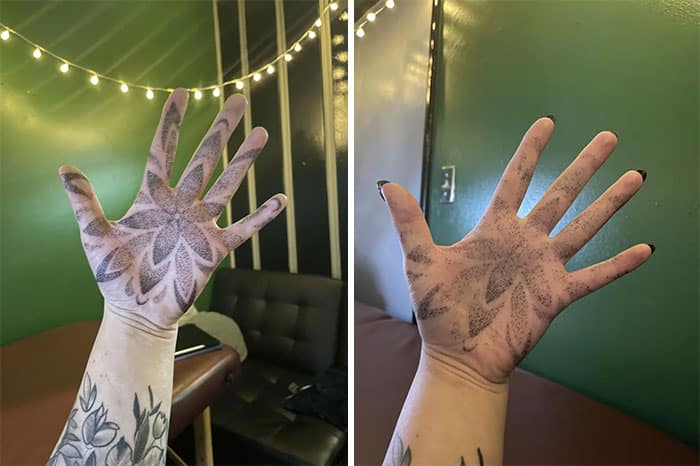
Everything true about finger tattoo fading is amplified on the palm. The palm has the thickest stratum corneum on the body, thicker even than fingers, because the mechanical demands are greater. The friction ridges visible as your fingerprints and palm lines exist specifically to maximize grip. They are friction architecture, and the skin that forms them sheds and regenerates at a rate that makes tattooing it one of the most technically demanding placements in the craft.
Palm tattoos frequently require multiple sessions to fully saturate because even during healing, the skin’s rapid renewal cycle begins pushing ink back toward the surface before it has had time to settle. Some clients go through two or three touch-up passes before the pigment holds consistently. A palm piece that looks fully solid at four months may look significantly lighter at eighteen months. With regular sun exposure and daily hand use, that timeline shortens further.
Artists who work these placements honestly describe them as a long-term relationship with a piece, not a one-time session. That is not a complaint about the placement. It is the reality of asking the most abrasion-adapted skin on the body to hold a permanent design.
Inner Lip Tattoos: A Completely Different Biology
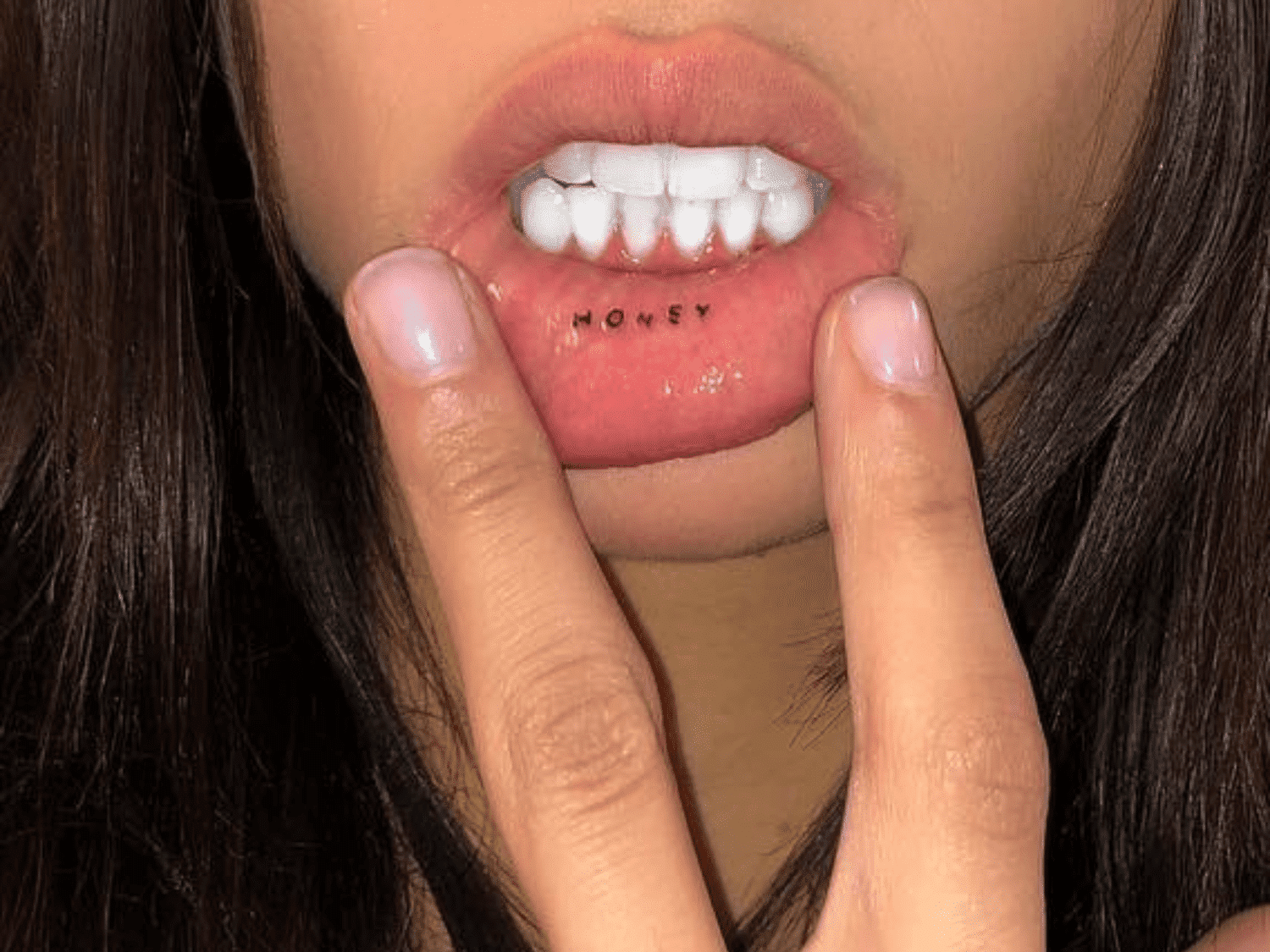
The inside of the lower lip is not skin in the dermatological sense. It is oral mucosa, a mucous membrane, and it operates under conditions that make even palm skin look stable by comparison.
Oral mucosa turns over faster than almost any tissue in the human body. The lining of the mouth is designed for rapid regeneration because the inside of the mouth is a uniquely hostile environment: constant movement from talking and eating, mechanical abrasion from food, a warm moist space rich in bacteria and enzymes that break down organic material. The mucosal renewal cycle inside the lip runs approximately 7 to 14 days. Regular skin runs approximately 28. Ink placed in the submucosal layer faces tissue actively working to eliminate foreign material, cycling at double speed, staying wet, and moving constantly.
What to actually expect from an inner lip tattoo: Most inner lip tattoos are effectively gone within two to five years. Some fade noticeably within the first year. The concealment is real and genuinely valuable for people with professional or personal constraints on visible tattoos. But anyone considering this placement should go in understanding that the timeline is measured in years, not decades. Touch-up sessions are a built-in part of the arrangement, not a sign something went wrong.
Healing also presents challenges specific to this location. Saliva contains enzymes. You are eating, drinking, and talking throughout the entire healing window. The area cannot be kept dry or wrapped. The window for giving the pigment the best chance to settle is narrow, and the environment works against it the entire time.
What Actually Slows Finger Tattoo Fading and What Does Not Help
Design is the first decision
Bold, high-contrast, simple shapes survive longer than delicate detail on all three of these placements. Thin lines are the first casualty of rapid cell turnover and friction. Planning the design around what the tissue can actually hold, rather than what looks best in a reference photo on someone else’s hand, is the single most effective thing you can do before sitting down. The choice to go bold here is not an aesthetic compromise. It is working with the biology rather than against it.
Sunscreen is not optional
Daily high-SPF sunscreen on healed hand and finger tattoos is one of the most direct ways to slow finger tattoo fading. UV radiation accelerates both pigment breakdown in the dermis and surface cell turnover in acral skin. In a state where your hands are in direct sun nine months of the year, this is not a minor variable. Consistent moisturizing also helps. Dry skin turns over faster, and keeping acral skin hydrated reduces the mechanical stress on the healed tattoo. For inner lip work, keeping the area clean during healing without oversanitizing is the right balance.
Touch-ups are part of the plan, not a failure
For these placements, a touch-up is not a sign something went wrong. It is an expected step in maintaining work in high-turnover, high-friction tissue. Building that expectation in from the beginning, rather than being surprised by it at eighteen months, is one of the most useful mindset shifts you can bring to the process. The tattoos that age best across any placement are the ones where the client understood the maintenance reality going in.
Artist experience with these placements is not interchangeable
The technical margin for error on fingers, palms, and inner lips is smaller than on standard body skin. The needle depth window is narrower. The saturation required is higher. The design adjustments necessary are different. An artist who has worked these placements consistently, who understands acral skin behavior from experience, will produce a result that holds better and ages more predictably. It is worth asking specifically about this before you book.
The Honest Bottom Line on Finger Tattoo Fading
Finger tattoo fading, palm pigment loss, and inner lip tattoo disappearance all follow the same biological logic: the skin in these locations is built for conditions that are hostile to permanent pigment. Acral skin is built for friction. Oral mucosa is built to replace itself fast. Ink placed in these tissues works against the design of the tissue, and over time, the tissue wins unless the work is maintained.
None of this is an argument against these placements. It is an argument for going into them with the right information: a design suited to the location, realistic expectations for longevity, and the understanding that some placements require ongoing attention in a way that a forearm or back piece simply does not. If you want an honest read on what will and will not hold in your specific skin, reach out before you commit. That conversation is always worth having.
Frequently Asked Questions
Finger tattoos typically show noticeable fading within 6 to 12 months. Fine-line work can lose definition in as little as 3 to 4 months. Bold, solid designs last longer but still require touch-ups within the first 1 to 2 years. Finger tattoo fading is faster than any other standard placement due to the high-friction acral skin and accelerated cell turnover in the hands.
Finger tattoo fading happens faster because finger skin (acral skin) has a thicker outer barrier, a thinner dermis, and a faster cell renewal cycle than standard body skin. Constant friction from daily use, joint movement over knuckles, and UV exposure from hands being outdoors all accelerate the process. The biology of this skin type is built for abrasion resistance, not pigment retention.
Palm tattoos face the same biological problem as finger tattoos but in a more extreme form. The palm has the thickest stratum corneum on the body and regenerates at a rate that often requires multiple saturation sessions to fully hold ink. A palm tattoo that looks solid at four months may look significantly lighter at eighteen months. Touch-ups are a built-in part of maintaining palm work.
Most inner lip tattoos are effectively gone within 2 to 5 years. Some fade noticeably within the first year. Oral mucosa, the tissue lining the inside of the lip, renews itself every 7 to 14 days, roughly twice as fast as regular skin. The wet environment, constant movement, and enzymatic activity of saliva all contribute to rapid pigment loss.
Not necessarily. Finger tattoo fading at these placements is driven by the biology of acral skin, not by technique alone. Even a perfectly applied finger tattoo will fade faster than work on standard body skin. That said, artist experience with these specific placements does affect longevity. The right needle depth and saturation for acral skin differ from body skin, and an artist who works these placements regularly will produce results that hold longer.
The most effective factors are design choice (bold, simple, high-contrast work survives longer than fine-line detail), daily SPF sunscreen on healed hand tattoos, regular moisturizing to reduce skin turnover speed, and planned touch-up sessions. No approach eliminates finger tattoo fading entirely, but these habits extend the life of the work significantly.
Thinking About One of These Placements?
Have the conversation before you book. We can tell you whether your design is right for the placement, what to expect honestly, and what adjustments will make the work last longer.