
Cover-Up Tattoo in Delray Beach: What Actually Makes a Great Cover-Up Work
Cover-Up Work & Design Strategy
Cover-Up Tattoo in Delray Beach: What Actually Makes a Great Cover-Up Work
Vatican Tattoo Studio · Delray Beach, FL
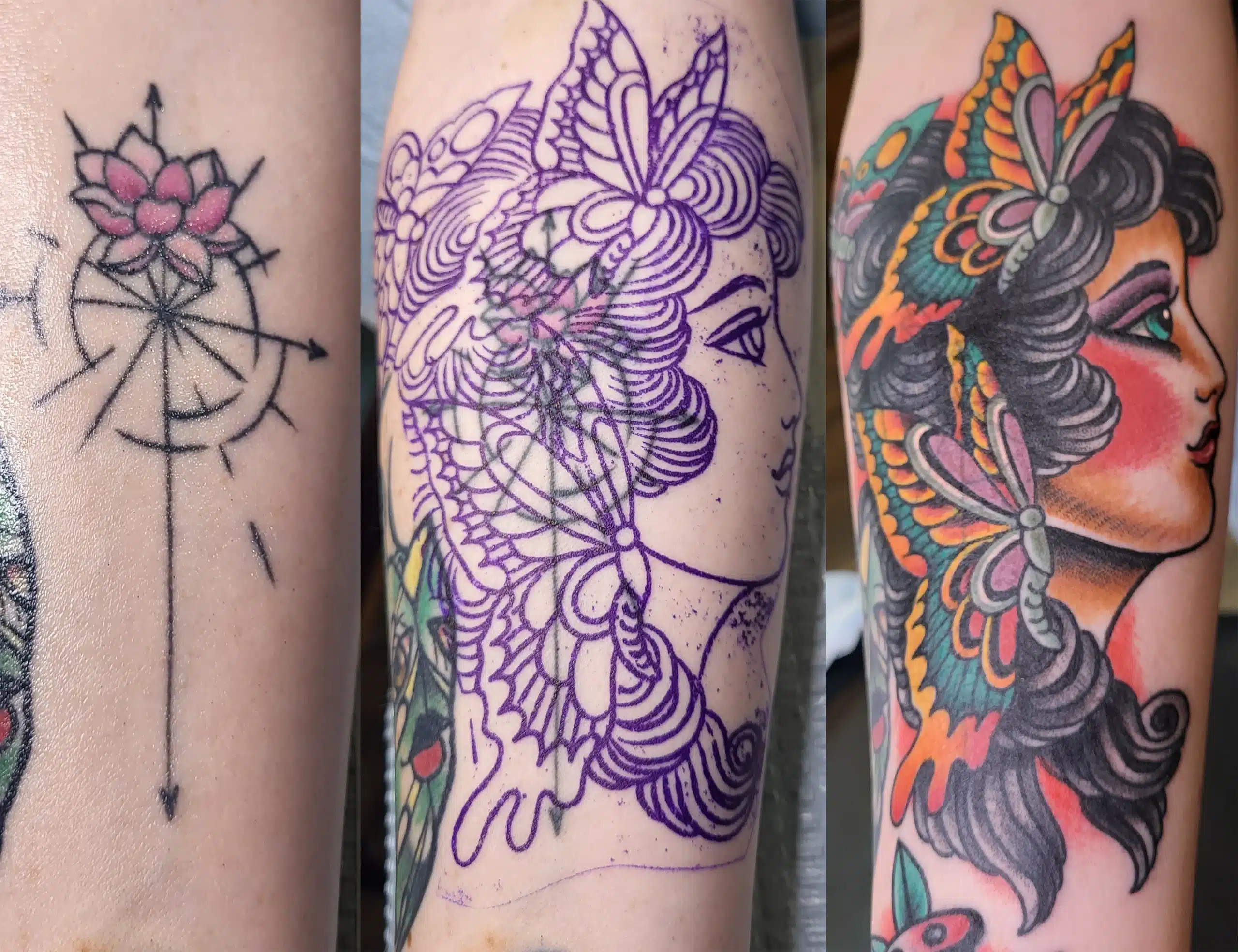 A good cover-up tattoo should look like a tattoo you chose on purpose. Not a correction. Not a save. A tattoo.
Looking for a cover-up tattoo in Delray Beach usually starts the same way. There is a tattoo you regret, or one that has faded past the point of looking the way it used to, or a name you no longer want on your skin. You pull up photos online of impossible cover-ups where a tiny faded butterfly became a photorealistic lion sleeve. You wonder if someone can do that for you. And then an honest tattoo artist tells you how cover-ups actually work.
A cover-up is not the same artistic problem as a new tattoo. Everything about the design is already constrained before an artist draws a single line. The size has to be bigger. Colors have to be darker. Composition has to hide what is already underneath. Working inside those constraints is why the best cover-up artists are not just tattooers. They are puzzle designers. They are working inside a frame someone else already built, and the quality of the result depends on how well they understand the frame.
Why Cover-Up Tattoos Are a Different Skill
Most tattoo artists can do a cover-up. Not all of them should. A cover-up requires a specific way of thinking that regular tattooing does not. Instead of starting with a blank canvas and designing something you love, the artist is working backward from a constraint. The old tattoo dictates where ink has to go dark, where it can be lighter, what shapes have to appear in specific places, and how large the whole piece needs to be to hide the outline underneath.
Cover-up specialists spend years training their eye to see what is possible. They look at an old tattoo and immediately start overlaying design options in their head. Where does the darkest point of the old piece land? What shape can hide it? Can the new design flow naturally around that shape, or does it have to be awkwardly placed? Can a flower petal cover that letter? Will a leaf cluster hide the sharp line at the top?
An artist who does mostly new work can make a cover-up look fine on day one. But a cover-up specialist knows how the piece will heal and age. Old ink underneath can bleed through months later as the skin above thins and lightens. Specialists know how to compensate for that. They lay down more pigment where they know fade will reveal shadows. They choose designs that can absorb a small amount of ghosting without being ruined. That is a different craft.
The Rule of Design: Bigger, Darker, Smarter
Three design rules apply to almost every successful cover-up. Each one exists because of how ink behaves under skin, not because of personal taste.
The Three Non-Negotiable Rules
- →Bigger. A cover-up is almost always two to three times the size of the original. The new design needs enough visual mass to pull the eye away from any ghosting, and enough space to naturally hide the old outline inside its composition.
- →Darker. Dark ink covers light ink. Light ink does not cover dark ink. You cannot cover a solid black tribal piece with a pastel watercolor design. Any artist who promises you can is not being honest. The new design has to use black and dark colors wherever the old design is dark.
- →Smarter. The design needs natural dense areas. Floral designs work because leaves overlap. Traditional and neo-traditional work because they have thick outlines and solid fills. Blackwork works because it is designed around dense black mass. Fine line and realism do not work for most cover-ups because they rely on open skin and subtle gradient. There is no open skin or subtle gradient available when you are hiding something underneath.
These rules are the reason a specialist will sometimes tell you that your dream design is not possible as a cover-up. If you want a delicate script phrase to cover a dark tribal arm band, it will not work. If you want a photorealistic portrait where a saturated old traditional tattoo already lives, it will not work. The design has to earn the right to cover what is there.
A good cover-up looks like a tattoo you chose on purpose. Not a correction. Not a save. Just a tattoo that happens to live where another one used to be.
The Four Paths to Fixing a Tattoo You No Longer Want
A full cover-up is not the only option. The right path depends on what the old tattoo looks like, how dark it is, how much design freedom you want, and how much time and cost you are willing to invest. These are the four honest approaches.
1. Full Cover-Up
The new design is large enough and dark enough to fully hide the old tattoo in a single session or series of sessions. This works best when the original is small, faded, or already relatively light. It is the fastest path but comes with the most design constraint. You trade design freedom for speed. The new piece will not look like whatever a free-hand design on blank skin would look like, but it can still be beautiful work.
2. Partial Cover-Up with Blackout or Decorative Elements
For heavily saturated or dark old work, a specialist might use large areas of solid black ink combined with floral, geometric, or decorative elements to break up the old design and reframe the area. Blackout tattoos take this to the extreme and cover large sections of skin in solid black. Partial approaches are good for forearm bands, dark tribal work, or old traditional pieces that have lost their original intent. The design can look striking and intentional while giving the artist room to work.
3. Rework or Bold Re-Line
If you still like the general idea of your original tattoo but it has faded, blurred, or aged poorly, a rework keeps the composition and adds new life. The artist strengthens the outlines, adds color or shading, and sometimes extends the design with new elements that modernize the look. This is not technically a cover-up but it belongs in the same conversation because people who hate their old tattoo sometimes just hate how it has aged, not the original idea. A thoughtful rework is cheaper, faster, and preserves the meaning. We cover this in more depth in our faded tattoo guide.
4. Laser Lightening Then Cover-Up
The longest path and the one that offers the most design freedom. A few sessions of laser treatment can significantly lighten an old tattoo without fully removing it. Once the old ink is faded enough, the artist has far more flexibility in design, size, and color choice. This typically means two to six laser sessions spread across six months to a year, with healing time between each, before the cover-up itself can begin. It costs more and takes longer, but if your old tattoo is dark and dense and you have a specific vision that cannot work otherwise, this is the honest path to that vision. A cover-up specialist should be able to tell you whether this is necessary at your consultation.
What You Can Hide, and What You Cannot
Here is the honest version of what works and what does not. These are the patterns a cover-up artist sees every week.
What covers well: small faded tattoos, amateur or stick-and-poke work, old names with thin lines, light-colored designs, tribal work that was never fully saturated, and tattoos that have aged significantly. The less ink in the skin, the easier the cover.
What is hard to cover: dense black tribal, old traditional work with heavy saturation, large block lettering, dark portraits, and anything that was recently done by a professional with heavy ink loading. Hard edges on words are particularly difficult because the eye naturally tracks straight lines. Even when covered, a sharp horizontal edge in the original can show as a subtle shadow through the new design.
What usually needs laser first: any dark design where you want a lighter cover-up, any portrait where you want a different style, and any dense old work where the new design you want cannot be bigger or darker than what is there. If the only way to make your dream cover-up work is a design that violates the three rules, laser lightening becomes the only honest path.
The Consultation: What a Cover-Up Artist Needs to See
A cover-up consultation is different from a regular tattoo consultation. It is longer. It involves more back-and-forth. And the artist will often give you honest limits on what is possible before anyone picks up a drawing tablet.
Here is what to bring to the consultation and what to expect.
The tattoo itself, in person
Phone photos are not enough. An artist needs to see the actual saturation in good light, how the ink has settled, where the darkest and lightest areas are, and how the skin has aged around the tattoo. Skin texture itself matters too.
Reference images of what you want
Bring several options rather than one locked-in idea. The old tattoo may rule out your first choice but could easily accommodate a variation of it. Styles, color palettes, and general compositions help more than specific designs.
An open mind about size
Almost every cover-up is bigger than the client originally expected. If you were hoping a cover-up could stay the same size as the original, that is almost never possible. Walk in prepared for the design to grow.
Honest history on the old tattoo
How old is it? Who did it? Has it been touched up? Any laser treatment already? This context helps the artist judge how the ink will behave under new work.
Expect a frank conversation
A good cover-up artist will tell you upfront what is and is not possible. If the answer is laser first, they will say so. If your reference image will not work, they will explain why and offer alternatives. That conversation is the real value of the consultation, more than any pricing quote.
The hard truth about cover-up expectations: The internet is full of before-and-after photos of impossible transformations. Most of them have context missing from the post. Some had laser lightening done beforehand. Others were already very light. A few used specific angles and lighting to minimize visible ghosting. A reputable cover-up artist will not show you a highlight reel. They will show you honest work on tattoos similar to yours, and tell you what to realistically expect for your specific case.
Common Cover-Up Scenarios and How Designers Solve Them
Different old tattoos call for different design strategies. These are the patterns that come through the shop most often and the general approaches that tend to work.
The Name or Script Cover-Up
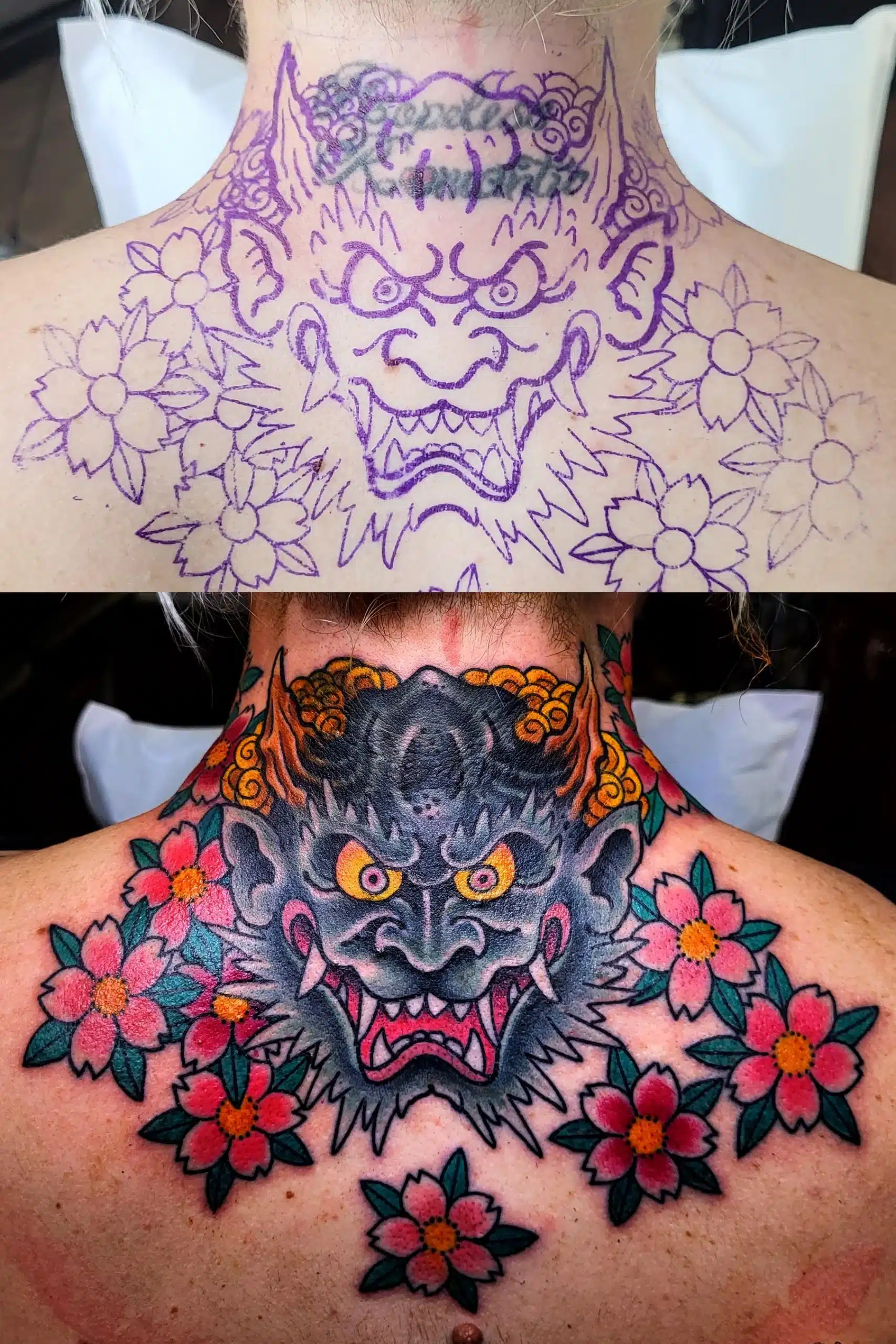
Names are among the most-requested cover-ups and some of the hardest. Script has long horizontal strokes with hard terminals that resist disappearing under new ink. Floral and botanical designs tend to work best because the natural curves of leaves and petals can be positioned to cross and hide letter shapes. Alternatively, a strong solid design element positioned where the name used to be, paired with surrounding elements, can transform the piece. Expect the cover-up to be noticeably bigger than the original script.
The Dark Tribal Cover-Up
Old tribal work tends to be solid black and heavily saturated. Full cover with a lighter design is almost never possible without laser lightening first. The usual honest path is either expansion into a larger blackwork or neo-tribal piece that incorporates the existing design, or laser treatment to lighten the ink enough that a new design has room to breathe.
The Old Traditional Cover-Up
Faded traditional work from decades back often responds well to a reworked neo-traditional or Japanese-style cover-up. Both styles have the dense outlines and strong fills needed to hide old lines, and both are respectful of the traditional aesthetic the client originally chose. The newer piece can honor the spirit of the old without being limited by its specific execution.
The Faded Amateur Cover-Up
The easiest cover-ups are usually old amateur tattoos. Stick-and-poke work, prison tattoos, and basement sessions tend to use less ink and sit shallower in the skin, which means they fade more over time and offer less resistance to new work. These often give the artist the most design freedom and the best final result, which is one of the small ironies of cover-up work. Your bad choice from a friend’s apartment is often easier to beautifully cover than professional work you later regretted.
Healing and Aging a Cover-Up
A cover-up heals the same way any tattoo heals, but with one extra consideration. Over the first few months, as the skin recovers and the fresh ink settles, a well-done cover-up should remain solid. Ghosting typically shows up over longer timelines, as the top layer of skin above the new ink gradually thins with sun exposure and age. This is why specialists lay down extra pigment in the areas where old ink lives beneath the new.
Proper aftercare matters more on a cover-up than on a fresh new piece. Sun exposure is the biggest long-term enemy. Daily high-SPF sunscreen on the healed tattoo preserves the density of the new ink and keeps the covered design from showing through over time. Our general tattoo aftercare guide covers the basics, and specialists will often add placement-specific instructions.
Some cover-ups benefit from a second session four to six weeks after the first. This is normal, not a sign of a failed first pass. Dense ink loading often needs a second visit to fully saturate the dark areas that are doing the covering work.
Finding a Cover-Up Artist in Delray Beach
Not every tattoo artist in Delray Beach specializes in cover-up work. When you look at an artist’s portfolio, you want to see cover-ups specifically, not just regular tattoos. Look for before-and-after examples with real original tattoos visible in the before shots. A strong portfolio shows a range of difficulty: some easy fades, some harder saturated pieces. Captions matter too — honest commentary about what was done and what was realistic separates the specialists from the general tattooers.
You can also look at how they talk about their process. Artists who are up front about limits and who explain why certain designs will or will not work are usually the ones producing the best cover-ups. Artists who promise anything and never say no are usually the ones producing results that look impressive in the chair and ghost through within two years.
The Vatican Tattoo artist roster includes several artists with cover-up experience across different styles. The right fit for your specific cover-up depends on what you want the final piece to look like. A floral cover-up specialist is a different artist than a Japanese-style cover-up specialist, and both are different from a blackwork specialist. The consultation is partly about finding the right design and partly about finding the right artist for that design.
Frequently Asked Questions
Can any tattoo be covered up?
Almost any tattoo can be covered or improved, but not every tattoo can be covered with any design. Dark, dense, or heavily saturated tattoos often need laser lightening before a cover-up with design freedom becomes possible. A cover-up tattoo artist in Delray Beach can tell you at consultation whether your specific tattoo needs laser first or can be covered directly.
How much bigger does a cover-up tattoo have to be?
A cover-up is almost always two to three times the size of the original tattoo. The new design needs enough visual mass to naturally hide the old outline and pull attention away from any ghosting that may appear as the skin ages. Smaller cover-ups are usually not possible without compromising on how well the old tattoo stays hidden over time.
What colors work best for cover-up tattoos?
Darker colors cover lighter colors. Black is the most reliable, followed by dark reds, deep blues, and dark greens. Light colors like yellow, pastel tones, or white cannot cover existing ink. Any successful cover-up uses dark pigments wherever the old tattoo is dark, which is why designs with natural black or deep-color areas work best for covering old work.
Do I need laser removal before my cover-up?
Sometimes. If your old tattoo is dark and heavily saturated and you want a cover-up design that cannot be bigger or darker than what is already there, laser lightening may be the honest path. Two to six laser sessions over six months to a year can fade the old ink enough to give an artist real design freedom. A good cover-up tattoo artist in Delray Beach will tell you whether laser is necessary at your consultation.
How much does a cover-up tattoo cost in Delray Beach?
Cover-up tattoo cost depends on size, complexity, color, and session time, the same factors that determine any tattoo price. Cover-ups typically run higher than fresh tattoos of similar size because of the specialized skill required and the added session time needed to properly saturate the dark areas doing the covering work. Our tattoo pricing guide covers the general range.
Will the old tattoo show through my cover-up?
A properly executed cover-up should fully hide the old tattoo at the time of healing. Over longer timelines of five to ten years, as the top layer of skin above the new ink gradually thins and lightens with age and sun exposure, some ghosting may appear in cover-ups of heavily saturated old work. Specialists compensate by loading extra pigment in those areas, and daily sunscreen on the healed cover-up slows the process significantly.
How long does a cover-up tattoo take to complete?
A simple cover-up on a small faded tattoo may finish in a single session. A larger or more saturated cover-up often takes two sessions spaced four to six weeks apart to allow healing between dense ink passes. Laser-assisted cover-ups take six months to a year of laser treatments before the cover-up itself begins. Your artist will give you a realistic timeline at consultation.
Ready for a Cover-Up Consultation?
Bring the tattoo, bring some ideas, come in with an open mind about size. We will tell you honestly what is possible with your specific tattoo and recommend the right artist for the direction you want to take.
Related reading: How to Fix a Faded Tattoo, Tattoo Aftercare, Our Artists.